
US Revokes Over 6,000 Visas Over Birth Tourism and Overhauls Green Card Filing Rules

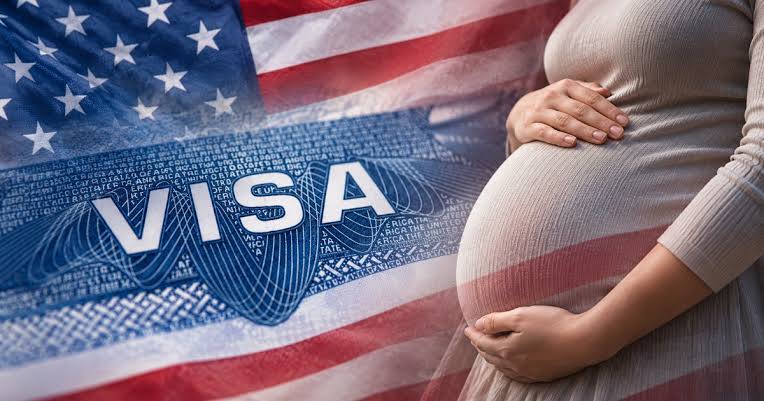
The United States government has revoked more than 6,000 non-immigrant visas over suspected "birth tourism" violations while simultaneously introducing sweeping procedural changes to employment- and family-based green card filing protocols. Announced by the U.S. Department of State alongside U.S. Citizenship and Immigration Services (USCIS) in November 2026, the dual enforcement and regulatory overhaul marks one of the most aggressive federal crackdowns on visa misuse and permanent residency processing in recent years. Immigration authorities stated that the measures are designed to protect the integrity of American citizenship laws, prevent systemic fraud, and eliminate severe administrative bottlenecks across visa adjudication centers.
According to senior officials within the State Department’s Bureau of Consular Affairs, the massive wave of over 6,000 visa revocations targeted foreign nationals found to have misrepresented their primary travel intentions when applying for B-1/B-2 tourist visas. Investigators uncovered extensive networks of unlicensed "birth tourism" agencies that coached pregnant applicants to conceal their pregnancy status during consular interviews, book stays at specialized maternity hotels, and utilize public healthcare subsidies to deliver children on U.S. soil for automatic birthright citizenship.
Consular authorities explained that under revised enforcement guidelines implemented during the second term of President Donald Trump, traveling to the United States with the primary purpose of giving birth to secure U.S. citizenship for a child is strictly deemed an impermissible use of a visitor visa. Beyond immediate visa cancellation, individuals caught participating in birth tourism schemes face multi-year or permanent bars from re-entering the United States under Section 212(a)(6)(C)(i) of the Immigration and Nationality Act for willful material misrepresentation.
Federal law enforcement agencies, including Homeland Security Investigations (HSI) and U.S. Customs and Border Protection (CBP), collaborated closely with consular posts worldwide to audit historical travel records, hospital billing logs, and financial transactions linked to suspected maternity agencies. Officials warned that even travelers who previously gave birth in the United States without settling their medical bills in full have had their active multi-year visas flagged and revoked electronically.
Alongside the visa revocation crackdown, USCIS unveiled major structural changes to green card (Form I-485, Application to Register Permanent Residence or Adjust Status) filing procedures, effective immediately for incoming applicants. Under the updated regulatory framework, applicants seeking adjustment of status within the United States must submit a fully completed, sealed medical examination report (Form I-693) concurrently with their initial green card application, eliminating the long-standing practice of submitting medical records later in the process.
USCIS officials stated that any Form I-485 package filed without an accompanying valid medical exam and vaccination record will now be subject to outright rejection rather than a standard Request for Evidence (RFE). Agency leadership emphasized that the policy shift is intended to streamline adjudication timelines, reduce repetitive administrative handling, and accelerate final decisions for fully compliant applicants.
Additionally, the revamped green card filing rules introduce stricter evidentiary thresholds for family-based petitions (Form I-130) and employment-based sponsorship categories. Applicants must now provide enhanced biometric verification, standardized digital financial sponsorship documentation (Form I-864), and expanded employment history disclosures covering the preceding ten years to undergo automated national security vetting.
For prospective immigrants applying from abroad through consular processing, the National Visa Center (NVC) has also tightened document verification protocols. Applicants in high-volume visa jurisdictions, including West Africa, South Asia, and Latin America, will face mandatory digital authentication of civil documents—such as birth certificates, marriage registries, and police clearance certificates—before interview dates are scheduled at U.S. embassies.
Immigration attorneys and legal advocacy organizations across the United States have reacted with mixed assessments to the dual announcements. While some practitioners acknowledged that concurrent medical filing could theoretically trim processing wait times for well-prepared applicants, civil rights groups warned that outright rejections for minor paperwork omissions could disproportionately penalize low-income families and self-represented petitioners.
Legal experts also raised concerns over the retroactive review of past tourist visa holders, noting that mothers who traveled years ago under different consular interpretations may suddenly find their valid 10-year visas canceled without prior warning right before scheduled business or family trips. Attorneys are advising all B-1/B-2 visa holders with prior U.S. birth histories to verify their visa status directly through the State Department’s Consular Electronic Application Center before booking international flights.
In countries with high rates of U.S. travel and family-based immigration, such as Ghana and Nigeria, travel consultants and immigration advisors have urged prospective applicants to exercise extreme transparency during embassy interviews. Advisors noted that consular officers at the U.S. Embassy in Accra and Lagos are applying heightened scrutiny to medical travel claims, requiring verifiable proof of upfront hospital payment agreements and comprehensive health insurance coverage for any legitimate medical visit.
Supporters of the administration's immigration agenda have applauded the crackdown as a long-overdue defense of American sovereignty and taxpayer resources. Conservative policy analysts argued that shutting down birth tourism loopholes and enforcing strict front-loaded green card documentation ensures that legal immigration pathways remain orderly, merit-driven, and self-sufficient.
Meanwhile, USCIS announced plans to update its online filing portal and publish revised step-by-step checklists to help petitioners navigate the mandatory concurrent medical examination requirement. The agency reiterated that applicants whose petitions are rejected for missing initial evidence will be permitted to refile once all required documentation is properly assembled, though filing fees and priority date cutoffs could be affected.
As federal agencies continue rolling out updated vetting algorithms and consular directives, immigration stakeholders anticipate further procedural adjustments heading into 2027. For millions of international travelers and aspiring permanent residents worldwide, the message from Washington is unmistakable: strict compliance, full financial self-sufficiency, and complete candor are now non-negotiable pillars of the U.S. immigration system.
Ultimately, the revocation of over 6,000 visas alongside the overhaul of green card filing rules signals a decisive new chapter in American border and immigration management, reshaping how foreign nationals plan both short-term visits and long-term futures in the United States.
Comments
Join the conversation. Please keep it respectful.
No comments yet — be the first to share your thoughts.