
The New Economy: Ghana Unveils $10 Billion 2027 Budget Plan as Minority Slams Rising Household Burden

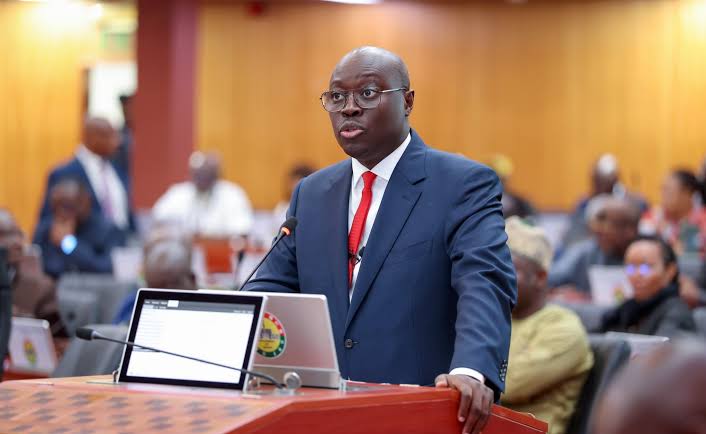
The Government of Ghana has released its ambitious $10 Billion New Economy Plan as part of its 2027 Budget Statement and Economic Policy, triggering an outcry from the Minority Caucus who said that the budget will place more of a strain on the average Ghanaian household. The Budget Statement was presented to Parliament in Accra on Friday 13th November 2026 by the Minister for Finance Dr. Cassiel Ato Forson on behalf of the President John Dramani Mahama. The statement sets out how the country will move towards being an export driven economy with innovation and value-added manufacturing. However, the Minority Caucus called the statement an "anti poor" budget with hidden taxes.
Speaking in Parliament during the 2027 Budget Statement, The Minister for Finance Dr. Cassiel Ato Forson emphasised the key points of the $10 Billion New Economy Plan which will be funded in the medium term with a combination of public-private partnerships, soft loans, Sovereign Wealth Fund and domestic capital market reforms. He stated that Ghana can no longer rely on exporting commodities and going into debt to develop the country. Instead the statement places heavy emphasis on investing in large scale processing, renewable energy, light manufacturing, AI and Logistics.
A key point of the $10 Billion New Economy Plan is expanding the government's 24 Hour Economy policy. This will be done with incentives, expanding Industrial Parks and special tariffs for night workers. Dr. Ato Forson said that large amounts of money will go into creating commercial farms, irrigation systems and local pharmaceuticals to drastically reduce Ghana's multi-billion dollar import bill. The Finance Ministry said that this will encourage GDP growth and keep the Ghana Cedi stable against other major trading currencies.
To encourage private sector development, the 2027 Budget Statement announced new credit guarantees from the Development Bank Ghana (DBG). There has also been increased funding for young entrepreneurs in the tech industry. With inflation reducing and increased economic discipline throughout 2026, the government said that they have set up the groundwork to make bold investments in the economy. "With this budget we move to an economy of wealth creation and not just stability," Dr. Ato Forson said to praise from the Majority.
To further modernize the economy and expand export earnings, the 2027 fiscal statement introduced dedicated financing windows for value-added mineral processing, particularly in gold refining, lithium, and bauxite. Dr. Ato Forson explained that retaining a larger share of resource value within domestic borders is essential to shielding the national economy from global commodity price shocks. Additionally, the plan earmarks significant resources for coastal marine infrastructure and regional aviation connectivity to position Ghana as a premier logistics hub under the African Continental Free Trade Area (AfCFTA).
However, the Minority Caucus of the New Patriotic Party (NPP) were quick to respond with a heated press conference. The Minority Leader Alexander Afenyo-Markin alongside the Ranking Member on the Finance Committee Mohammed Amin Adam, criticised the 2027 Budget Statement saying it is a "punitive household burden budget". They said that despite the $10 Billion New Economy Plan, the government is pushing through more taxes to increase domestic revenue collection which will take away from struggling families and businesses.
Speaking to journalists, the Minority said that there are increases in utility costs, compliance fees and excise duties on everyday items. They said that while people are struggling to pay high rent, transport costs and food costs, the government is increasing indirect taxes which will ultimately increase the price of these items in shops. The Minority said this could cause new inflation within the economy in early 2027.
"You cannot claim to be building a $10 billion new economy while systematically taxing the life out of the very households and small enterprises expected to drive that growth," Minority said. The Minority also questioned the credibility of the $10 Billion investment as they claimed the Mahama government have made empty promises and do not have a clear timeline for funding these investments.
Aside from the taxes on families, the Minority said there has been less funding for key social developments. They said that funding for free secondary schools, rural health centres and social payments have been reduced to fund the new industrial flagship projects. They said they would closely examine each line and would not allow any revenue bills to go through if it was bad for those on low incomes.
Members of the Majority and economic advisors from the Ministry of Finance have also responded to the Minority's claims saying that the 2027 Budget was misleading. The Majority said that there were no new harsh taxes on salary earners. Instead the government have focused on increasing the tax base and reducing leaks in procurement. They said that local food production and 24 hour manufacturing will help reduce the cost of living for families in the medium term.
Independent economists, policy think tanks, and business associations across Accra have begun dissecting the 2027 fiscal document, offering mixed assessments of its ambitious targets. While the Association of Ghana Industries (AGI) and the Ghana National Chamber of Commerce and Industry welcomed the $10 billion industrial focus and incentives for local manufacturing, consumer advocacy groups echoed concerns regarding utility adjustments and indirect cost pass-throughs. Financial analysts noted that the true test of the New Economy Plan will lie in strict expenditure discipline and transparent execution.
Civil society organizations specializing in fiscal transparency have similarly urged Parliament to ensure that the proposed capital inflows are protected from political interference and procurement inflation. Observers emphasized that clear quarterly performance benchmarks will be vital to tracking whether the $10 billion blueprint delivers tangible employment gains for Ghana's rapidly growing youth population.
As Parliament prepares to commence full-scale sectoral debates on the 2027 Budget Statement in the coming weeks, the clash between long-term macroeconomic transformation and immediate household relief has emerged as the defining battleground of Ghana's political economy. With the government banking on its $10 billion blueprint to unlock rapid industrialization and the Minority mobilizing to defend consumer pockets, the upcoming legislative sessions promise intense scrutiny over the future direction of the nation's finances.
Comments
Join the conversation. Please keep it respectful.
No comments yet — be the first to share your thoughts.