
The Korea You Don't See in K-Dramas: An Ordinary Man's Life Between Seoul and Gimcheon
By Tristan Kim | Seoul, South Korea
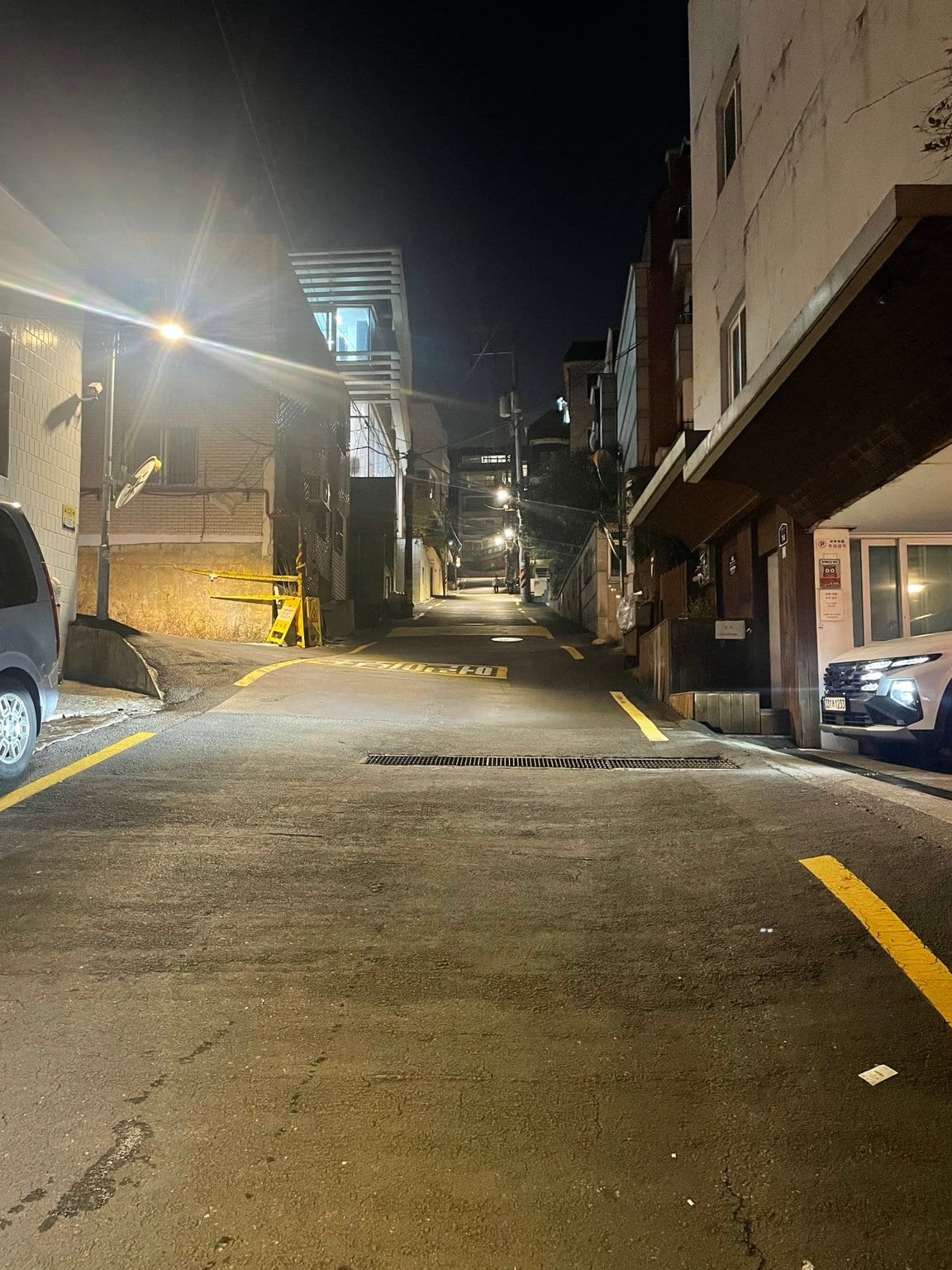
Cover photo: A residential lane in Itaewon, Seoul, after dark.
A Different Picture of South Korea
When people around the world think of South Korea, they often imagine K-pop stars, romantic television dramas, fashionable streets and impressive technology. Those are all parts of Korea. But they are not the whole story.
I am Tristan Kim, an ordinary Korean man who works in construction and interior design. I live in Seoul, have family connections to Gimcheon, a smaller city in central South Korea, and spend much of my time moving between work, family and community activities.
My life is not particularly glamorous. I take buses, walk through residential neighborhoods, visit construction sites, spend time with my family and enjoy music with friends. I began documenting these experiences because I wanted to show international readers what everyday Korean life looks like beyond the entertainment industry.
Morning in Seoul: Getting to Work
I live in Itaewon, a neighborhood in Seoul known internationally for its restaurants, multicultural character and nightlife. But for me, Itaewon is also a residential neighborhood filled with steep roads, small houses, familiar shops and ordinary people beginning their working days.
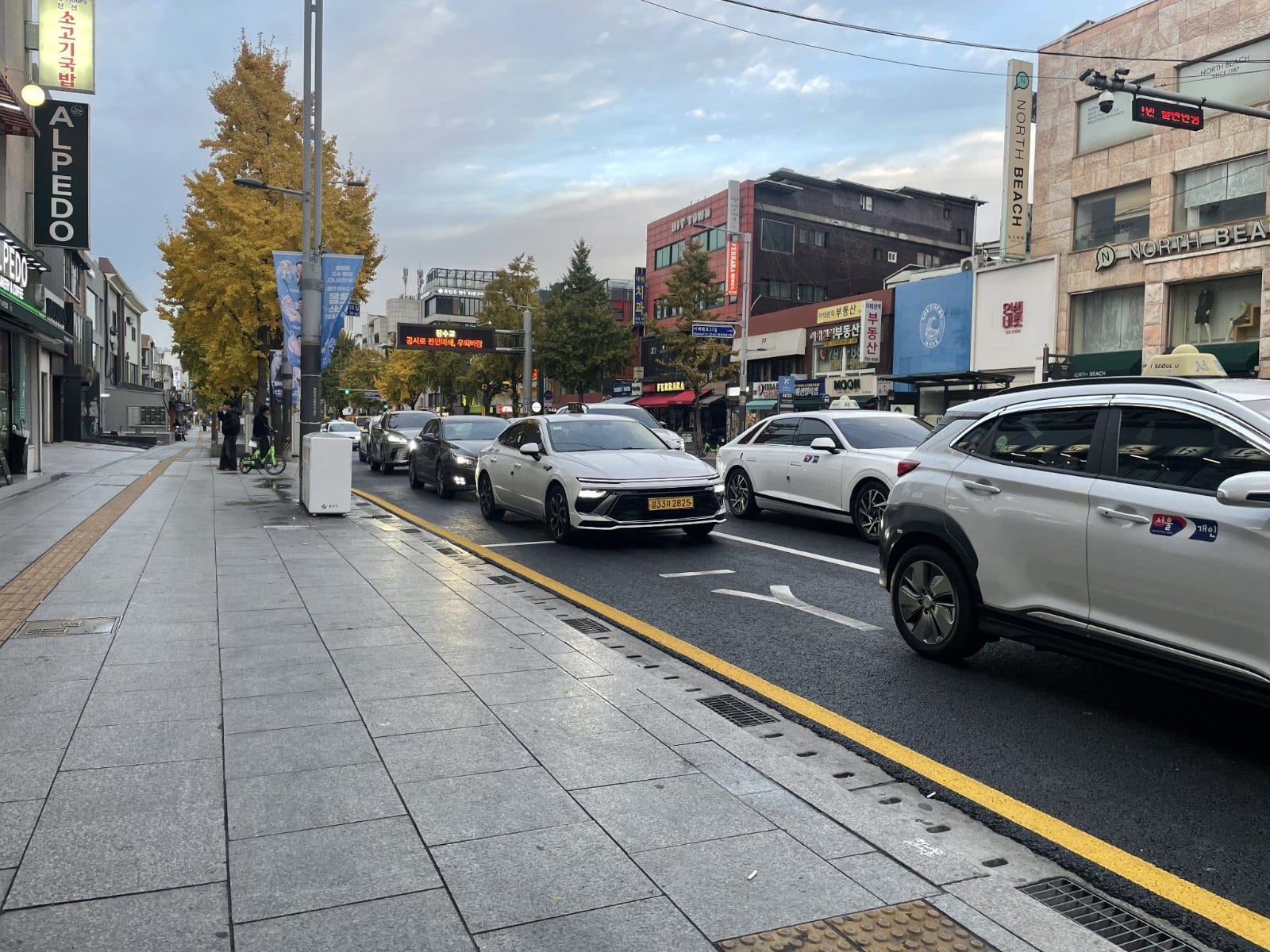
Ginkgo trees turn gold along a busy street in Itaewon, Seoul.
My commute takes me toward Gangnam, where I work in the construction and interior design industry. There is no single direct bus that conveniently takes me through my entire journey. Sometimes I transfer at Nonhyeon Station, waiting near the headquarters of a Korean coffee company whose cafés I often visit.
It is a small detail, but one that captures everyday urban life. Even in a technologically advanced city, getting to work still involves waiting for buses, changing routes and watching the traffic.
Seoul's public transportation system is one of the things I appreciate about living here. Digital arrival information, convenient transfers and dedicated bus lanes make daily travel more manageable.
In winter, small public facilities can make a meaningful difference. Some bus stops have heated seating areas, while steep neighborhood roads may have systems designed to prevent ice from forming.
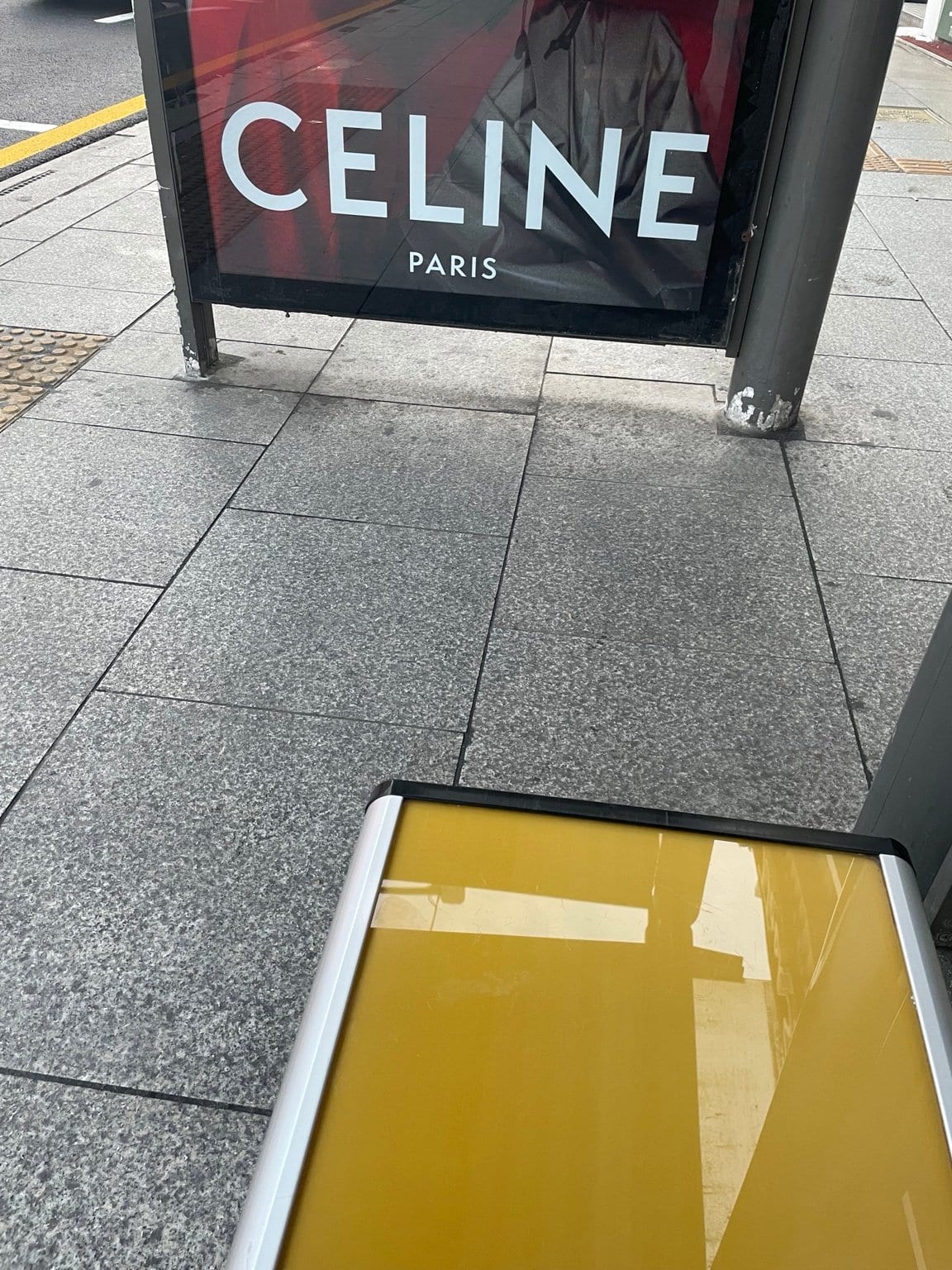
A heated bench at a bus stop in Seoul.
These are not the spectacular landmarks tourists normally photograph. Yet they are part of the city I experience every day.
The Reality of Working in Construction
My professional life is closely connected to buildings. I have worked in construction management, interior projects and related business activities. My work often involves visiting sites, discussing design details, inspecting quality and coordinating with different teams.
One day I may be looking at the finishing details of a residential interior. Another day I may be reviewing progress at an office renovation project. People sometimes imagine Korean offices as highly polished environments filled with young professionals dressed in fashionable clothes. The reality is usually much more practical.
There are deadlines, difficult decisions, inspections, meetings and unexpected problems. Construction projects require cooperation among many people whose work is rarely visible once a building is completed. I have learned that the quality of a building depends not only on its appearance but also on the care invested in details that most people will never notice.
This professional perspective also affects how I see cities. I pay attention to bus shelters, pavement, stairways, lighting and the spaces where people meet. For me, architecture is not simply about creating impressive buildings. It is about making everyday life work.
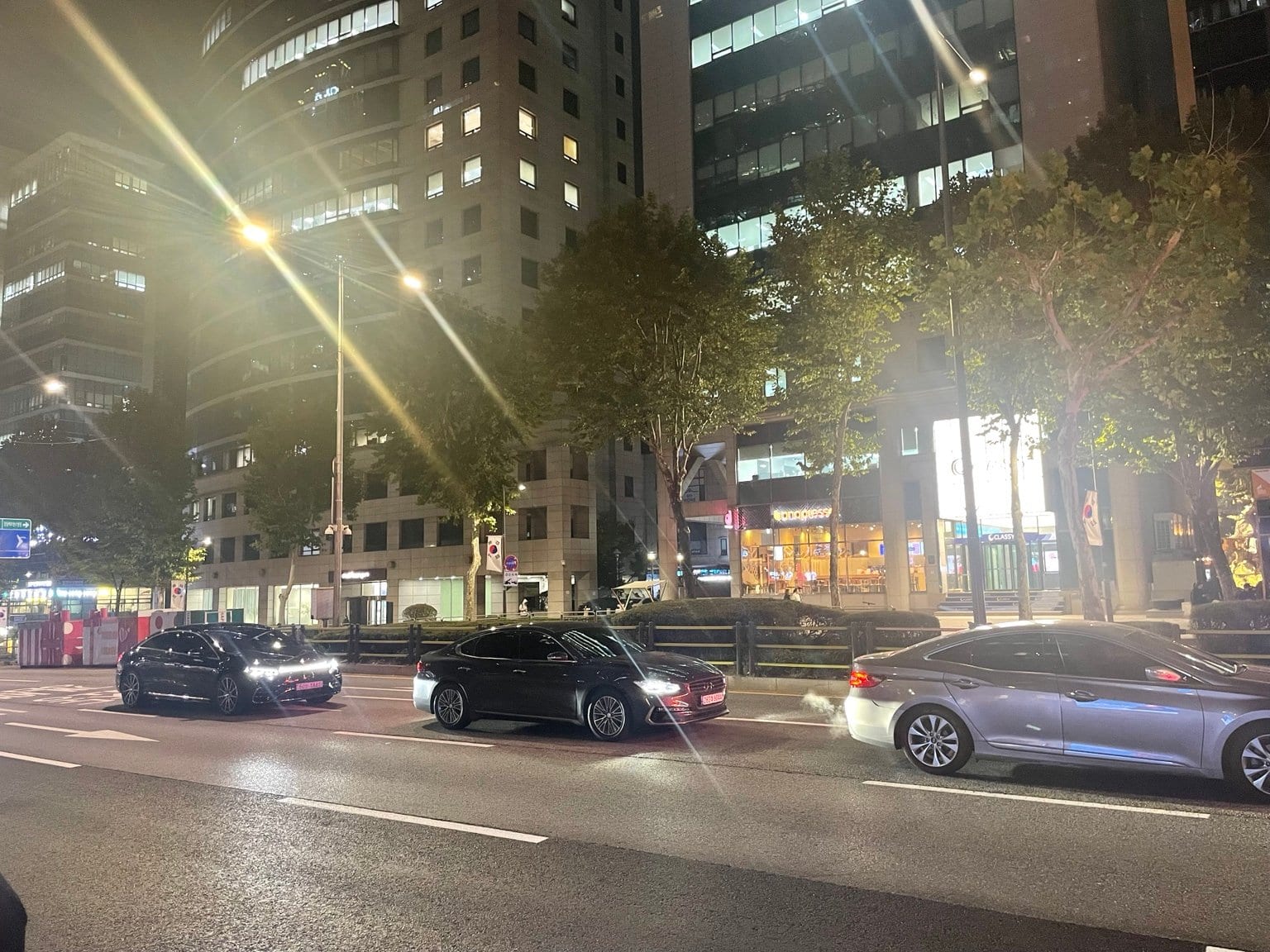
Evening traffic passes the office buildings of Yeoksam, Seoul.
Gimcheon: The Korea Beyond Seoul
Although I spend much of my working life in Seoul, Gimcheon remains an important part of my personal world. Gimcheon is a smaller city in North Gyeongsang Province, away from the crowded streets of the capital. It offers a different rhythm of life.
When I visit my family, I encounter scenes that feel very different from central Seoul: quieter streets, seasonal landscapes, familiar neighborhoods and ordinary family routines. My parents live there, and even small details of their daily lives have become subjects for my photographs.
They have a dog named Sarang, which means "love" in Korean. A photograph of Sarang may seem unimportant compared with the sophisticated images often associated with South Korea. But such moments are exactly what I want to preserve. The changing seasons also shape the landscape. In autumn, the trees around temples and neighborhoods change color. At other times of the year, local parks and lakes offer their own distinctive scenes.
Korea is not only Seoul, and Korean life is not only the fast-moving world of technology and entertainment. Much of the country consists of smaller cities, families, neighborhoods and people living their ordinary lives.
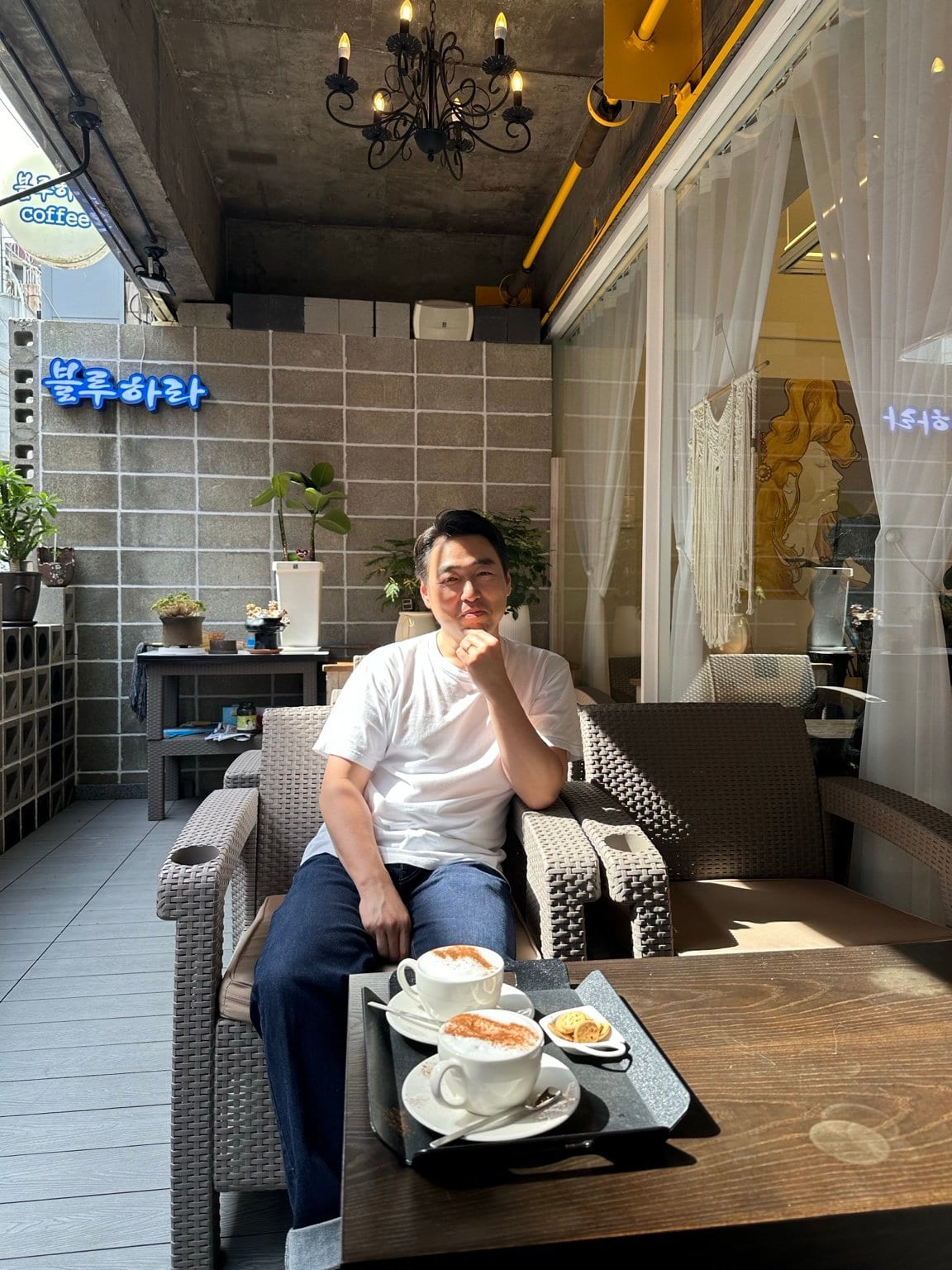
Tristan Kim at Bluehara café in Gimcheon.
Music, Dancing and Meeting People
Outside my professional work, music plays an important role in my life. I also work as DJ Tristan, organizing social dance gatherings in Seoul and Gimcheon. In Hongdae, a lively district popular with young people and international visitors, I help operate Macondo, a gathering place for Kizomba and Afrobeats music.
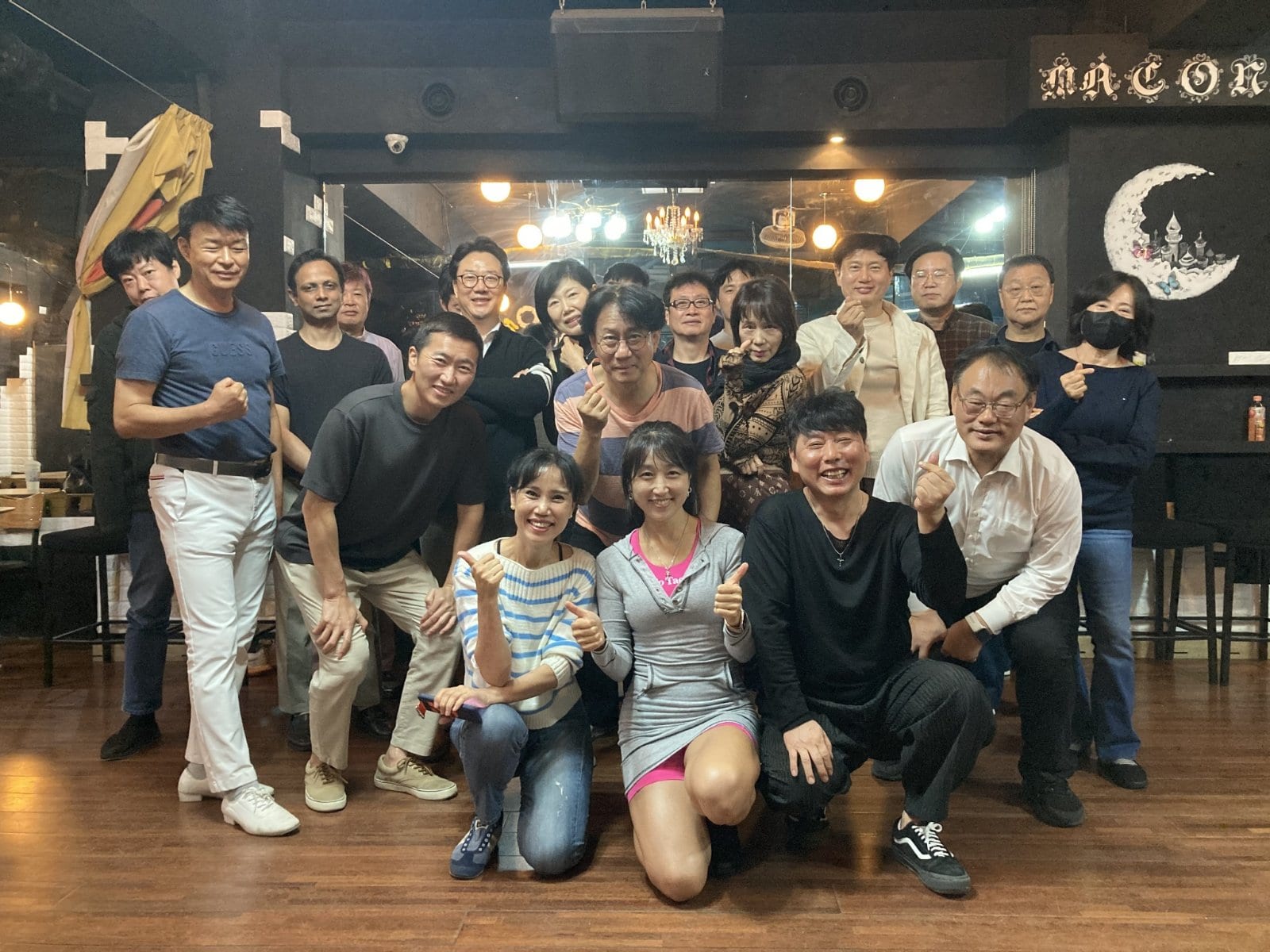
Dancers gather for a group photo at Macondo in Hongdae, Seoul.
In Gimcheon, I organize Gatsby, another social dance community. These activities have introduced me to people from different backgrounds, countries and generations. What I find most interesting is that people do not always need to share the same language to enjoy an evening together. Music provides a different kind of communication.
At a dance gathering, someone who has lived in Korea for many years may meet a visitor who has just arrived. People with very different jobs and personal histories can share a dance and a conversation.
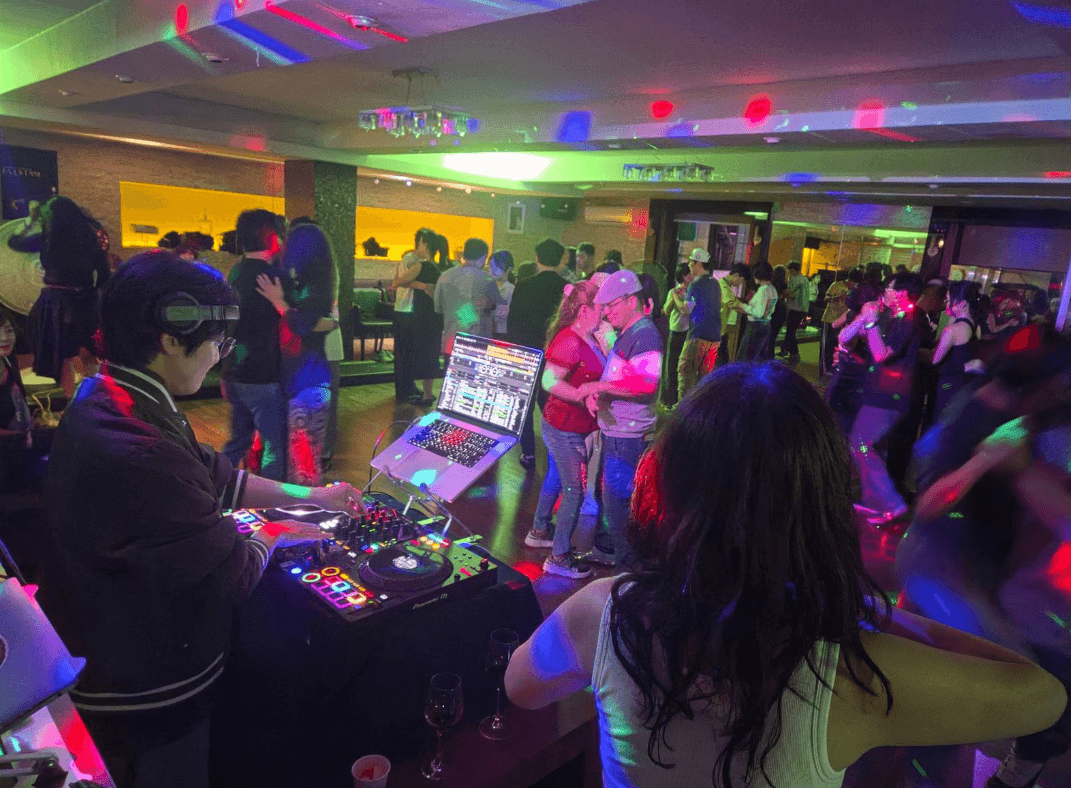
Couples dance at Gatsby’s fourth-anniversary kizomba party in Gimcheon.
It is a reminder that life is not made meaningful by technology alone. We also need friendship, shared experiences and places where we can meet one another in person.
Family Life and Being an Ordinary Korean Father
I am also a father. Like many parents, I think about education, the future and the opportunities available to the next generation. My son is studying in Japan, so our family life has an international dimension. My wife is Japanese, and our experiences have made me especially interested in the ways people from different cultures understand each other.
Living between Korean and Japanese family cultures has taught me that many everyday concerns are remarkably similar. Parents worry about their children. People want meaningful work. Families try to balance responsibilities, money, time and personal happiness. These concerns are not particularly Korean. They are human.
When I write about my life, I am not trying to suggest that every Korean man lives as I do. South Korea is a diverse society, and each individual has a different experience. I simply want to offer one honest perspective.
Beyond the Perfect Image
South Korea has become highly visible around the world. That international attention creates opportunities for cultural exchange, but it can also produce unrealistic expectations. A television drama may portray a romantic encounter in a beautiful café. A music video may show stylish streets and elegant apartments.
The ordinary reality includes crowded buses, tired workers, elderly parents, neighborhood dogs, construction sites, grocery shopping and people finding small moments of happiness after a long day. I do not think this reality makes Korea less interesting. I think it makes the country more understandable. For international readers who are curious about Korea, I hope these personal stories provide another way to explore the country.
You do not need to imagine every Korean person as a television character. Sometimes the most revealing story is simply what happens on an ordinary Tuesday morning.
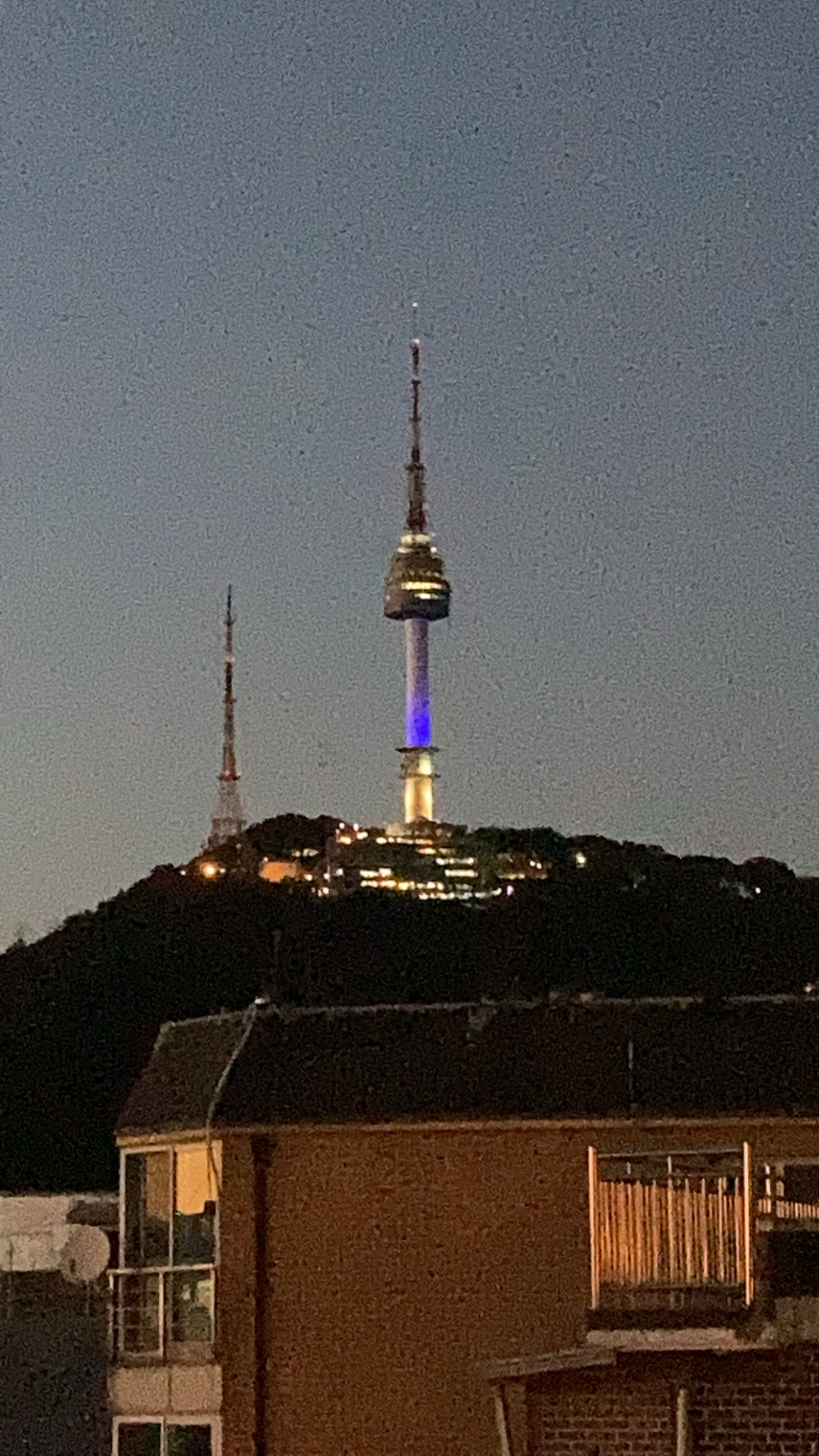
N Seoul Tower seen from Itaewon after dark.
A Personal Invitation
I continue to photograph and write about my daily experiences through a project called PG Global Insight, including a series of personal stories about the life of an ordinary Korean man. My purpose is not to present a perfect version of Korea. It is to share the places I visit, the people I meet and the little moments that make up my life.
If you ever visit Seoul or Gimcheon, I hope you discover not only the famous attractions but also the quieter neighborhoods, ordinary routines and welcoming communities that exist beyond them.
There is much more to Korea than what appears on a screen. And sometimes, the most interesting part begins when the screen is turned off.
About the Author
Tristan Kim is a South Korean construction and interior design professional, writer, photographer and social dance DJ. He documents ordinary life in Seoul and Gimcheon, focusing on architecture, public spaces, family experiences and human connections. His personal writing project, PG Global Insight, is available at:
Comments
Join the conversation. Please keep it respectful.
No comments yet — be the first to share your thoughts.