
Nigeria Plane Crash: President Tinubu Declares 3 Days of National Mourning After NAF ATR-42 Disaster.

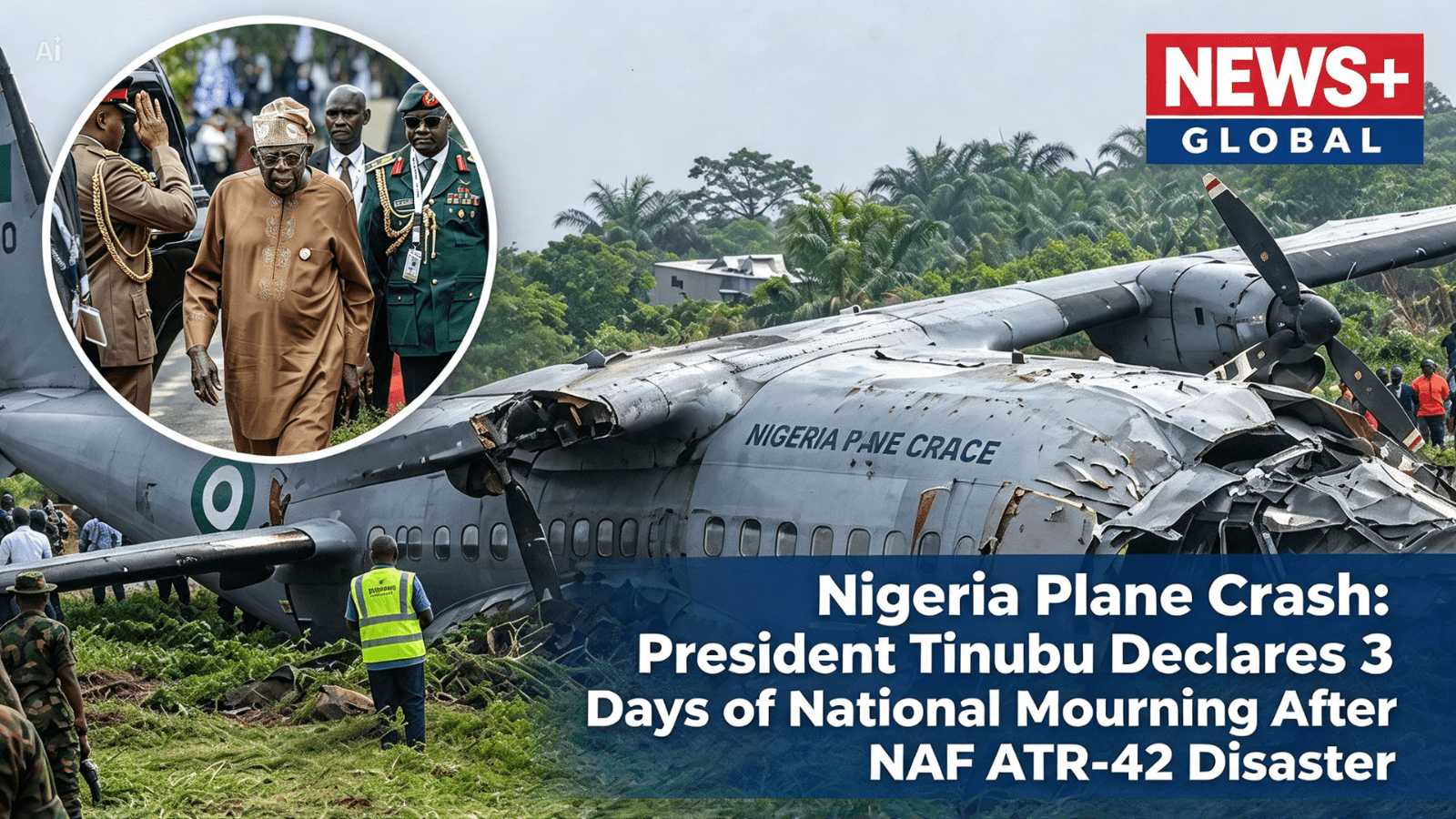
ABUJA, Nigeria — Nigeria’s President Bola Tinubu has declared three days of national mourning after a disastrous Nigerian Air Force (NAF) aircraft crash in southern Ondo State. The presidency ordered national flags to be lowered to half-mast at all government, military, and foreign missions buildings across the country in honor of the fatalities. This comes at a time when there is great national sorrow as inquiries continue into what went wrong to cause the disaster.
The twin-turboprop surveillance aircraft, an ATR-42-500 Maritime Patrol variant, NAF 931 (earlier cited as NGR 931) was on a routine transport mission from Benin Airport in Edo State to the Murtala Muhammed International Airport in Lagos, when air traffic controllers lost contact with the flight at 9:13 a.m. local time. Despite several emergency attempts to re-establish radio contact with the flight deck, the plane vanished from radar scopes, creating chaos in the civil aviation sector.
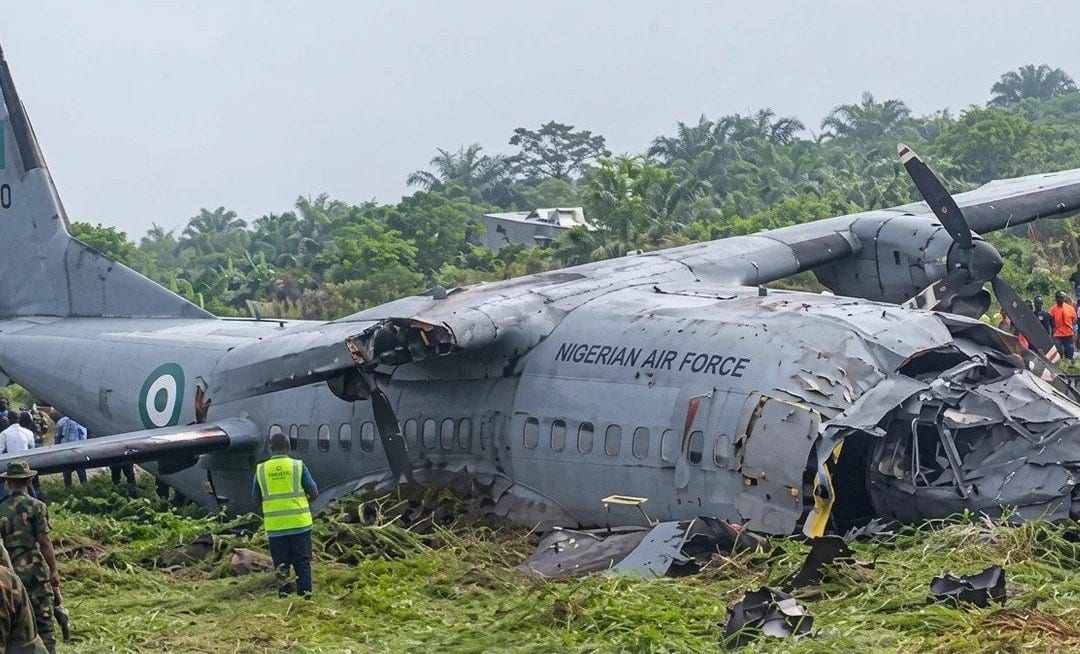
As initial situational reports on Monday revealed that 32 people had been killed in the disaster, another official clarification on Tuesday by NAF – Director of Public Relations and Information Air Commodore Ehimen Ejodame, revealed that there were 25 people aboard the plane – 20 passengers and 5 crew members. Unfortunately, there are no survivors as the search and rescue teams confirmed. It will be the deadliest single accident involving a Nigerian military aircraft since a structural failure brought down a C-130 transport plane in 1992.
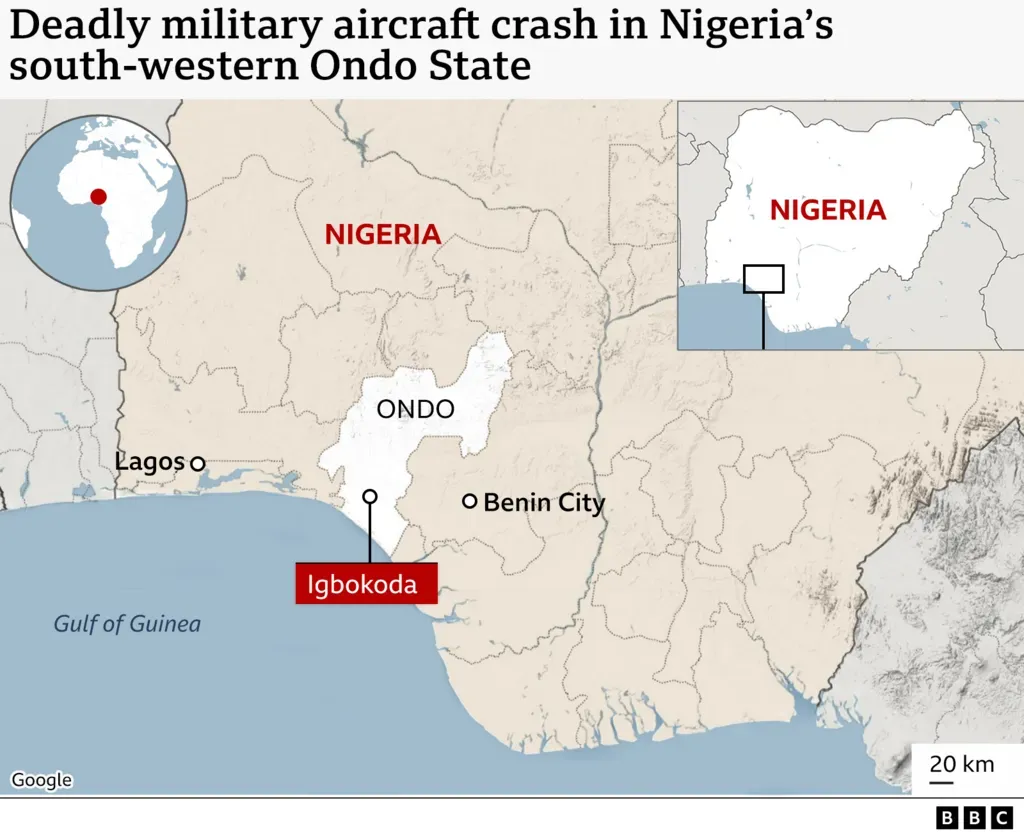
The wreckage was eventually found in the riverside town of Igbokoda, in the Ilaje Local Government Area of Ondo State. Responding emergency teams found that the fuselage had plunged directly into a dense, muddy swamp opposite a prominent local Nigerian Navy base. Local residents reported hearing a deafening impact and seeing plumes of thick smoke rising from the marshlands. The plane had become significantly submerged under water due to heavy terrain, forcing military rescue boats and dive teams to navigate through dense forest vegetation to retrieve remains, clothing, and scattered personal belongings.
It is breaking their initial silence for the first time after briefing immediate kin that the Nigerian Air Force published the identities of the 25 victims, of which 19 were serving military personnel. The flight crew was led by Captain Squadron Leader M.I. Aburime and co-pilot Squadron Leader A.P. Man-Ugwueje. Prominent civilian and service passengers who lost their lives in the line of duty were Flying Officer I.M. Adeshina, Master Warrant Officer Onwuka F., and civilian passengers Ukeme David and Joy Michael, receiving a massive outpouring of community condolences across social channels.
The devastating loss of life drew an immediate solemn response from the Commander-in-Chief and defense heads. “This is a painful moment for our Armed Forces and for the entire nation,” President Tinubu stated in an emotional executive address. “Our Air Force personnel put their lives on the line every day to secure Nigeria, and their sacrifice will never be forgotten.” Accompanying the President’s remarks, Chief of the Air Staff Air Marshal Sunday Kelvin Aneke expressed great grief, calling the incident an agonizing chapter for the service and vowing comprehensive structural support to the bereaved families.
To safeguard the future integrity of tactical operations, President Tinubu has ordered the Air Force to immediately embark on a thorough board of inquiry to determine the cause of the crash. The investigation is expected to face intense scrutiny after independent media revelations that the 16-year-old ATR-42 aircraft had returned to active deployment after nearly three years grounded in Germany for intensive maintenance. With previous high-profile crashes fresh in memory – such as the tragic May 2021 Kaduna crash that claimed the life of Army Chief Lt.-Gen. Ibrahim Attahiru – this has rekindled heated public debate about fleet age, maintenance budgets, and standard safety protocols in Nigeria’s strategic defense apparatus.
Comments
Join the conversation. Please keep it respectful.
No comments yet — be the first to share your thoughts.