
Mahama Directs 10% Emergency Bed Expansion To End "No-Bed Syndrome" Healthcare Challenge

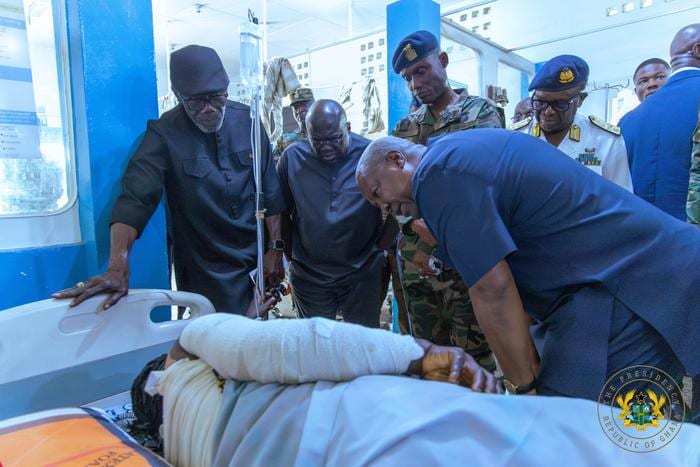
President John Dramani Mahama has directed a sweeping structural expansion of emergency units across four major hospitals in a decisive move to permanently eliminate the country's persistent "No-Bed Syndrome". The executive policy directive was formally announced on Friday, November 6, 2026, during the 68th Annual General Conference of the Ghana Medical Association (GMA) held at Miotso near Prampram. This nationwide health initiative targets a mandatory increase in critical care infrastructure to prevent emergency facilities from turning away vulnerable patients.
The ambitious infrastructure development plan mandates that Accident and Emergency (A&E) centers expand their local bed capacities to constitute a minimum of 10 per cent of each targeted hospital's total functional bed strength. According to the presidential roadmap, physical construction and facility upgrading works are officially slated to commence early next year. The strategic overhaul aims to align Ghana's primary referral stations with global emergency medical care benchmarks.
The four primary public healthcare establishments designated for immediate state-backed expansions span critical geographic regions across the country. They include the Korle Bu Teaching Hospital (KBTH) in Accra, the Komfo Anokye Teaching Hospital (KATH) in Kumasi, the Tamale Teaching Hospital (TTH) in the Northern Region, and the 37 Military Hospital. By localizing these structural upgrades, the government intends to establish balanced, regional nodes capable of absorbing sudden surges in emergency trauma cases.
To illustrate the dramatic scale of the upcoming project, President Mahama highlighted the specific administrative expansion targets set out for the country's apex referral facility. At the Korle Bu Teaching Hospital, meeting the mandatory 10 per cent infrastructural threshold will require more than doubling its existing A&E capacity. The institution's baseline emergency capacity will be aggressively scaled up from a restrictive 65 beds to at least 150 dedicated emergency slots.
Recognizing that physical infrastructure alone cannot solve systemic healthcare bottlenecks, the executive branch has pledged a comprehensive operational support framework. The physical expansion of emergency spaces will be matched by the recruitment, training, and strategic deployment of additional specialized medical personnel. Furthermore, the state will guarantee the direct provision of state-of-the-art diagnostic equipment, continuous piped medical oxygen, and essential trauma consumables.
While long-term engineering and expansion works are organized for next year, President Mahama also announced immediate relief measures to de-escalate current hospital overcrowding. He ordered the immediate, full-scale opening of the Ghana Armed Forces Critical Care and Emergency Hospital to members of the general public. This state-of-the-art military facility, which began admitting civilian patients on Friday, provides crucial, immediate bed capacity to absorb current regional emergency deficits.
During his keynote address to the nation's medical fraternity, President Mahama issued a stern warning to hospital administrators regarding the unethical treatment of critical patients. He emphasized that the dangerous practice of turning away dying citizens under the guise of localized bed shortages must cease immediately. The President asserted that every citizen arriving at a public emergency gate retains a fundamental right to immediate medical assessment and stabilization.
“When a patient arrives in critical condition, we cannot simply say, 'No bed, no bed, go somewhere else.' At the very least, the patient must be assessed,” President Mahama stressed to the gathered delegates. He clarified that hospitals lacking the specialized resources to provide definitive treatment must first utilize local assets to stabilize the patient's vitals. Only after achieving medical stability should administrators coordinate a structured, safe transfer to a higher-tier facility.
To facilitate these critical cross-hospital transfers and eliminate communication gaps, the Ministry of Health has successfully piloted a digital oversight platform. Minister for Health Kwabena Mintah Akandoh recently completed a final inspection of the National Integrated Bed Management and Referral Coordination System at the Greater Accra Regional Hospital. This innovative system captures real-time information across participating hospitals, allowing dispatchers to verify actual bed spaces virtually before deploying emergency ambulances.
The technological platform integrates directly with the National Ambulance Service, instantly mapping out more than 650 hospitals and over 5,000 beds for regular digital updates. By virtually connecting emergency departments with incoming paramedics, the system minimizes delays and protects vulnerable patients from being shuttled between filled facilities. The current active pilot utilizes a fleet of 20 high-spec ambulances strategically distributed across the Greater Accra and Ashanti Regions.
The government's multifaceted strategy has been widely embraced by the leadership of the Ghana Medical Association. Addressing the national conference, GMA President Professor Ernest Yorke highly commended the state's infrastructural commitments while advocating for long-term legislative backing. Professor Yorke called for the swift enactment of a comprehensive Emergency Care Act to permanently guarantee citizens access to high-quality, timely healthcare during life-threatening crises.
Furthermore, to ensure the long-term financial sustainability of these expanded critical care departments, the executive branch has pledged targeted fiscal interventions. President Mahama promised enhanced budgetary support to the National Health Insurance Authority (NHIA) to ensure that emergency treatments remain fully funded and accessible to all. He warned that any accredited health facility caught charging illegal out-of-pocket fees outside standard insurance frameworks would face severe regulatory sanctions.
As regional health Directorates prepare to execute the multi-site A&E expansions, the Mahama administration's holistic approach represents a massive step forward for Ghana's healthcare ecosystem. By combining physical bed additions with digital real-time mapping, workforce recruitment, and strict regulatory oversight, the state is actively rebuilding public trust in its emergency services. For thousands of ordinary Ghanaians, these reforms ensure that a sudden medical crisis will no longer be met with a closed hospital door.
Comments
Join the conversation. Please keep it respectful.
No comments yet — be the first to share your thoughts.