
Kwakye Ofosu Defends Removal of Big Six from New Cedi Notes: ‘Nobody Owes Anybody a Permanent Fixture’

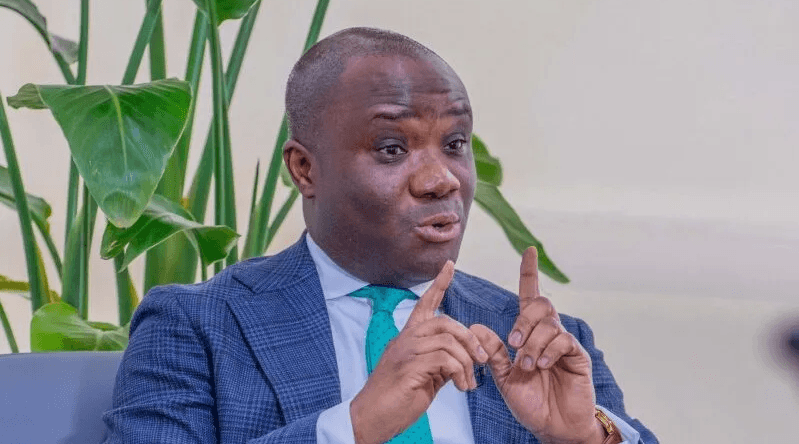
Government spokesperson and Minister of State in charge of Government Communications, Felix Kwakye Ofosu, has forcefully defended the removal of the "Big Six" portraits from Ghana's newly unveiled Cedi banknotes, asserting that no individual or political group holds an eternal entitlement to feature on the nation's currency. Addressing intense opposition backlash following the Bank of Ghana's launch of the upgraded "Ghana Heritage Series" banknotes, Kwakye Ofosu dismissed claims of political malice as baseless and historically misguided. He emphasized that periodic updates to national currency designs are standard global practice and that "nobody owes anybody a permanent fixture" on Ghana's legal tender.
The heated political row erupted after the Bank of Ghana officially unveiled the modernized Cedi notes in Accra on Thursday, November 12, 2026. Presided over by Central Bank Governor Dr. Johnson Pandit Asiama alongside President John Dramani Mahama, the newly designed banknotes—scheduled to enter circulation on December 1, 2026—replaced the collective group portrait of the Big Six with traditional Adinkra symbols, national monuments, and cultural motifs, while retaining Dr. Kwame Nkrumah on the flagship GH¢200 note.
Reacting to accusations from senior New Patriotic Party (NPP) figures that the omission was a deliberate attempt to erase the contributions of founding fathers like J.B. Danquah and Edward Akufo-Addo, Kwakye Ofosu urged critics to examine Ghana's monetary history objectively. He pointed out that the collective image of the Big Six was not an original feature of the Cedi at independence, nor had it been a permanent fixture throughout the nation's post-colonial history.
"Nobody owes anybody a permanent fixture on our national currency," Kwakye Ofosu stated bluntly during a media engagement. He reminded the public that the Big Six portrait was only introduced onto Ghanaian banknotes in 2007 during the currency redenomination exercise under former President John Agyekum Kufuor. According to the government spokesperson, if a previous administration exercised the sovereign discretion to introduce those portraits less than two decades ago, the current central bank leadership holds equal institutional authority to update the artwork to reflect modern national aspirations.
Kwakye Ofosu further explained that prior to 2007, Ghanaian banknotes routinely featured diverse themes celebrating the country's socioeconomic backbone, including cocoa farmers, timber workers, dams, and educational institutions. He argued that shifting away from partisan-tinged historical debates toward universally unifying symbols like Adinkra motifs and national landmarks promotes genuine national cohesion rather than division.
The Minister's remarks come on the heels of sharp criticism from NPP stalwarts, including former Forestry Commission Deputy CEO Musah Superior, who labeled the redesign "politically motivated" and demanded that a future NPP government immediately restore the Big Six images. Kwakye Ofosu dismissed such threats as empty political posturing designed to distract Ghanaians from the tangible technical benefits of the currency upgrade.
Defending the Bank of Ghana's operational independence, Kwakye Ofosu stressed that the Ghana Heritage Series was driven entirely by technical necessity rather than executive interference. He highlighted that the redesigned banknotes—spanning all eight denominations from GH¢1 to GH¢200—introduce advanced anti-counterfeiting security threads, tactile features for the visually impaired, moisture-resistant substrates, and more compact, wallet-friendly sizes.
"Instead of applauding a forward-looking upgrade that protects our economy from counterfeiters and saves taxpayers millions of cedis in replacement printing costs, some individuals want to reduce an important monetary milestone into petty partisan bickering," he noted. He maintained that the central bank acted strictly in accordance with international banking benchmarks, which recommend refreshing currency designs every 15 to 20 years to stay ahead of financial fraudsters.
Political observers note that the exchange underscores the deep-seated ideological rivalry between the Nkrumaist and Danquah-Busia traditions over the ownership of Ghana's independence narrative. While the NPP views the Big Six as foundational icons of its political heritage, figures aligned with the ruling National Democratic Congress (NDC) frequently argue that Dr. Kwame Nkrumah’s singular role as founder and first president warrants distinct historical recognition.
Despite the ongoing partisan debate across radio airwaves and social media platforms, commercial banks and financial institutions have already commenced recalibrating ATMs and cash-sorting machines ahead of the December 1 rollout. Central bank authorities have also reiterated that existing Cedi notes will remain valid legal tender and circulate alongside the new series without disruption.
As the countdown to December 1 continues, Kwakye Ofosu's blunt dismissal signals that the Mahama administration has no intention of retreating from the new currency design. With both sides digging into their historical positions, the debate over who belongs on the Ghana Cedi looks set to remain a spirited talking point in Ghana's political discourse.
Comments
Join the conversation. Please keep it respectful.
No comments yet — be the first to share your thoughts.