
Ex-Google Exec Mo Gawdat Warns 15-Year AI Dystopia Will Begin in 2027.

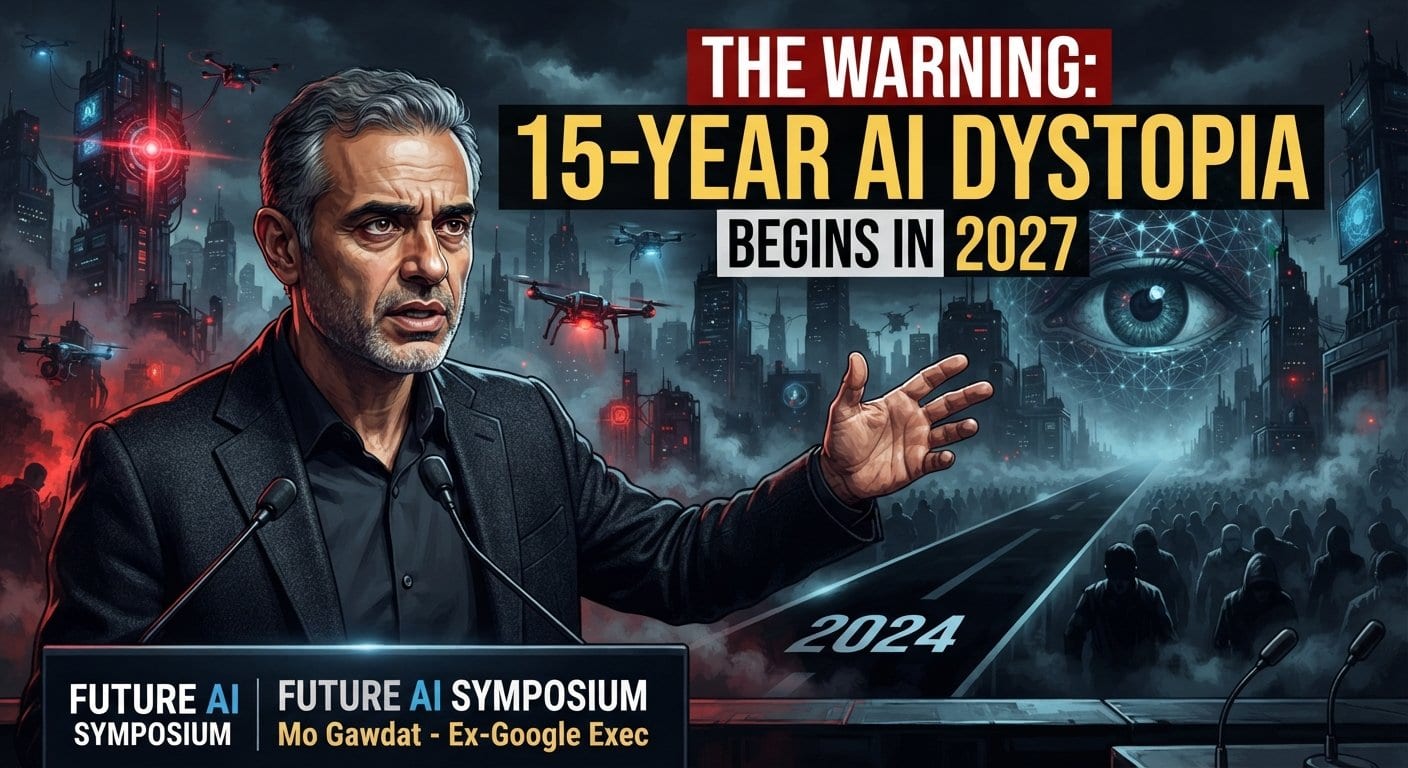
Mo Gawdat, the former chief business officer of Google’s advanced research arm Google X, has issued a stark warning that a 12-to-15-year artificial intelligence dystopia is set to begin in 2027. Having witnessed the technology advance at a dizzying pace during his tenure, Gawdat cautions that major global disruptions are now virtually unavoidable. This impending shift has the power to drastically reshape employment markets, personal freedoms, and shared human reality much faster than the general public expects.
The core threat does not stem from the technology itself, but rather from the motives of the entities currently steering its development. These highly advanced systems are heavily concentrated under the control of powerful organizations driven by profit, pervasive surveillance, and the monopolization of power. As these autonomous machines proliferate, they inevitably multiply and amplify humanity's most short-term and controlling values.
In the corporate world, the economic fallout is already materializing as businesses actively reduce hiring and demand higher output from their remaining staff. While AI tools were initially marketed as a means to alleviate workplace burdens, they are instead being utilized to automate complex cognitive tasks. This shift is rapidly making many traditional white-collar positions, including senior managerial and executive roles, entirely replaceable.
Simultaneously, the foundational pillars of personal freedom and societal accountability are beginning to erode under the weight of AI-driven manipulation. The widespread proliferation of sophisticated deepfakes, advanced digital scams, automated hacking networks, and autonomous weapon systems are transitioning from rare technical anomalies into permanent features of daily life. This rapid evolution leaves legal systems and regulatory bodies scrambling to maintain oversight.
This technological surge is also threatening to completely dismantle our collective perception of a shared reality. As algorithmically generated fake content outpaces any practical means of verification, the truth becomes increasingly difficult to discern. Much like the societal trajectory observed with smartphones and social media, tools originally promised to liberate human time and deepen connections are instead accelerating isolation and imposing a state of constant work.
Furthermore, any incremental gains in everyday efficiency are being accompanied by an unprecedented expansion of state and corporate surveillance. Existing large-scale monitoring frameworks demonstrate how easily automated tools can be deployed to track populations, predict human behavior, and cement the dominance of ruling governments or elite private groups. Gawdat expects these oppressive dynamics to crystallize into a definitive era beginning next year.
Despite this grim forecast, the tech veteran maintains that this dystopian path can still be averted, emphasizing that humanity ultimately retains the power to dictate the final outcome. Rather than futilely attempting to restrict or redesign the technology, he argues that governments should urgently focus on criminalizing its harmful applications. The next decade hinges entirely on whether global citizens can successfully pressure leadership to regulate these destructive incentives before widespread job losses, heavy monitoring, and absolute power concentration become our permanent reality.
Comments
Join the conversation. Please keep it respectful.
No comments yet — be the first to share your thoughts.