
"Don't Overspeed If Fines Are Too Costly," President Mahama To TraffiTech Critics

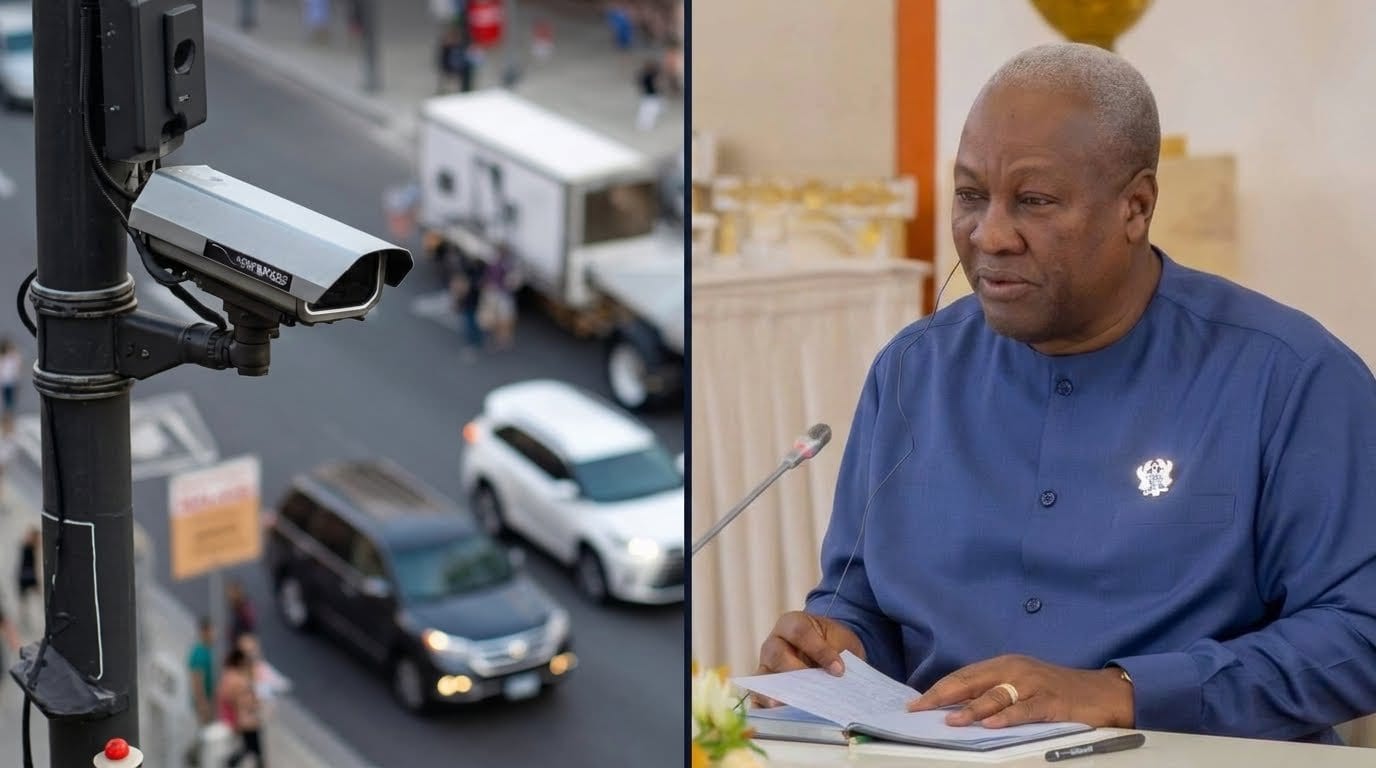
President John Dramani Mahama has defended the TraffiTech-GH digital traffic enforcement system, advising drivers that the easiest way to avoid fines is to obey speed limits. Speaking during the 2026 Commonwealth Heads of Government Meeting (CHOGM) in Antigua and Barbuda, Mahama dismissed complaints about the cost of automated citations and emphasized personal responsibility. He noted that motorists following established rules have nothing to fear from the automated camera networks.
Mahama grounded his support for the system in public safety, highlighting the dangers speeding poses to schoolchildren. He stated that addressing reckless driving through technology is a necessary protective measure. To ensure fairness, Mahama directed the Ghana Police Service to prioritize transparency by immediately installing speed camera warning signs along monitored routes. Following this directive, the National Road Safety Authority (NRSA) confirmed it is working with road agencies to deploy the warning signs.
The President rejected arguments from commercial driver unions who claim the government should first repair all defective road networks before deploying automated enforcement. He dismissed the idea that infrastructural shortcomings should cannot delay immediate, lifesaving speed limit enforcement. The President drew a direct historical analogy to developed nations like the United Kingdom, pointing out that British authorities actively enforce speed limits using camera networks despite operating on roads that are far from perfect.
The TraffiTech-GH platform, launched on November 1, 2026, was developed by the Motor Traffic and Transport Department (MTTD) using fixed, mobile, and laser devices to monitor speeds. Under Road Traffic Regulations, 2026 (L.I. 2519), limits are set at 50 km/h in urban areas, 90 km/h on national highways, 100 km/h on motorways, and 30 km/h near sensitive zones like schools and hospitals.
While backing the technological rollout, President Mahama simultaneously issued a critical directive to the Ghana Police Service and its partner implementation agencies to prioritize absolute public transparency. He instructed authorities to immediately begin the physical installation of highly visible signposts and camera warning symbols ahead of every monitoring location. Mahama explained that giving motorists advance notice that they are entering a digitally monitored zone is a necessary step when introducing structural tech innovations.
"You need to put signposts, warning motorists, that there is a speed camera ahead. I think that transparency is important," the President explicitly stated during the interview. He added that the goal of the TraffiTech-GH program should be to encourage voluntary driver compliance and cultivate road discipline rather than setting up hidden traps to trick citizens. Following this executive directive, the National Road Safety Authority (NRSA) confirmed that it is already engaging road infrastructure agencies to systematically deploy these warning signs.
The high-tech TraffiTech-GH platform officially went live with full nationwide implementation on Sunday, November 1, 2026, under the Motor Traffic and Transport Department (MTTD). The initial phase of the program is focusing heavily on over-speeding violations at high-risk, accident-prone highway corridors. To achieve comprehensive tracking, the system relies on an array of fixed camera poles, mobile smart tripod sensors, in-vehicle dash units, and laser speed-measurement equipment.
The underlying legal framework for the automated network is derived from the Road Traffic Regulations, 2026 (L.I. 2519), which details standard national speed limits. Beyond the 50 km/h metropolitan limit, motorists are restricted to a maximum of 90 km/h on standard highways and 100 km/h on expanding motorways. Crucially, Regulation 211 mandates a sharp reduction to a 30 km/h speed limit when driving near schools, markets, mosques, churches, and medical centers.
Once the sensors record a violation, the encrypted imagery is transferred to the MTTD back office for validation before a digital ticket lands directly on the vehicle owner's mobile phone via SMS. Legitimate notifications are easily recognizable, as they are dispatched strictly from the official sender identification "GPS-MTTD". Fines under the network start at a baseline of 25 penalty units (equivalent to GH¢300 at GH¢12 per unit) and must be settled within a strict 14-day window via mobile money, the Ghana.gov Portal, or shortcode *222# option 6.
Ignoring the digital notice or failing to clear the balance within two weeks triggers serious legal consequences, including a daily compound late fee. The automated platform will also place an immediate transaction lockout on the offender's profile at the Driver and Vehicle Licensing Authority (DVLA). Persistent offenders who ignore multiple citations risk facing formal arrest warrants, vehicle impoundments, or a mandatory one-year suspension of their physical driving privileges.
Comments
Join the conversation. Please keep it respectful.
No comments yet — be the first to share your thoughts.