
Burkina Faso Invests $19M in First Domestic Gold Refinery to Halt Raw Exports.

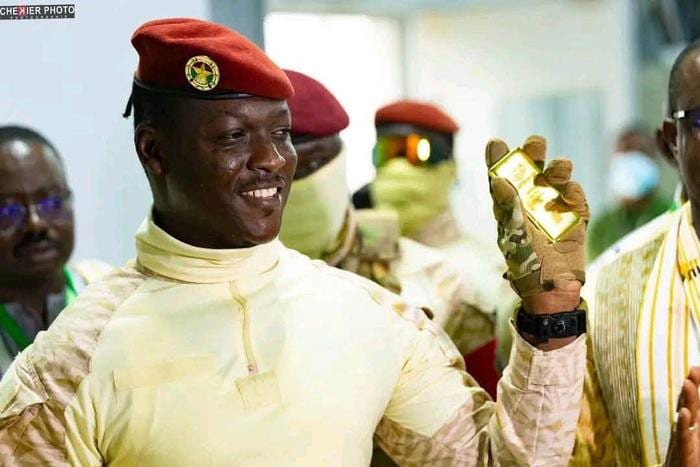
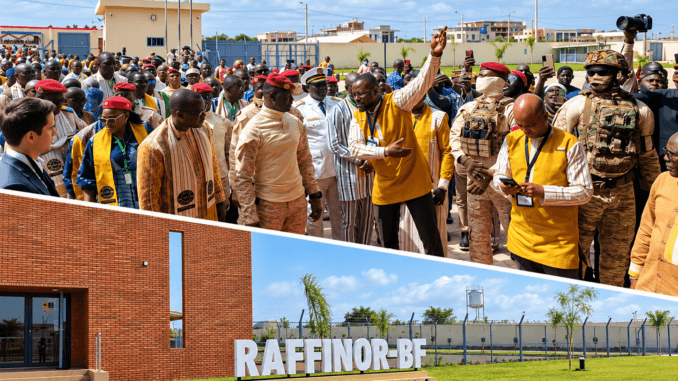
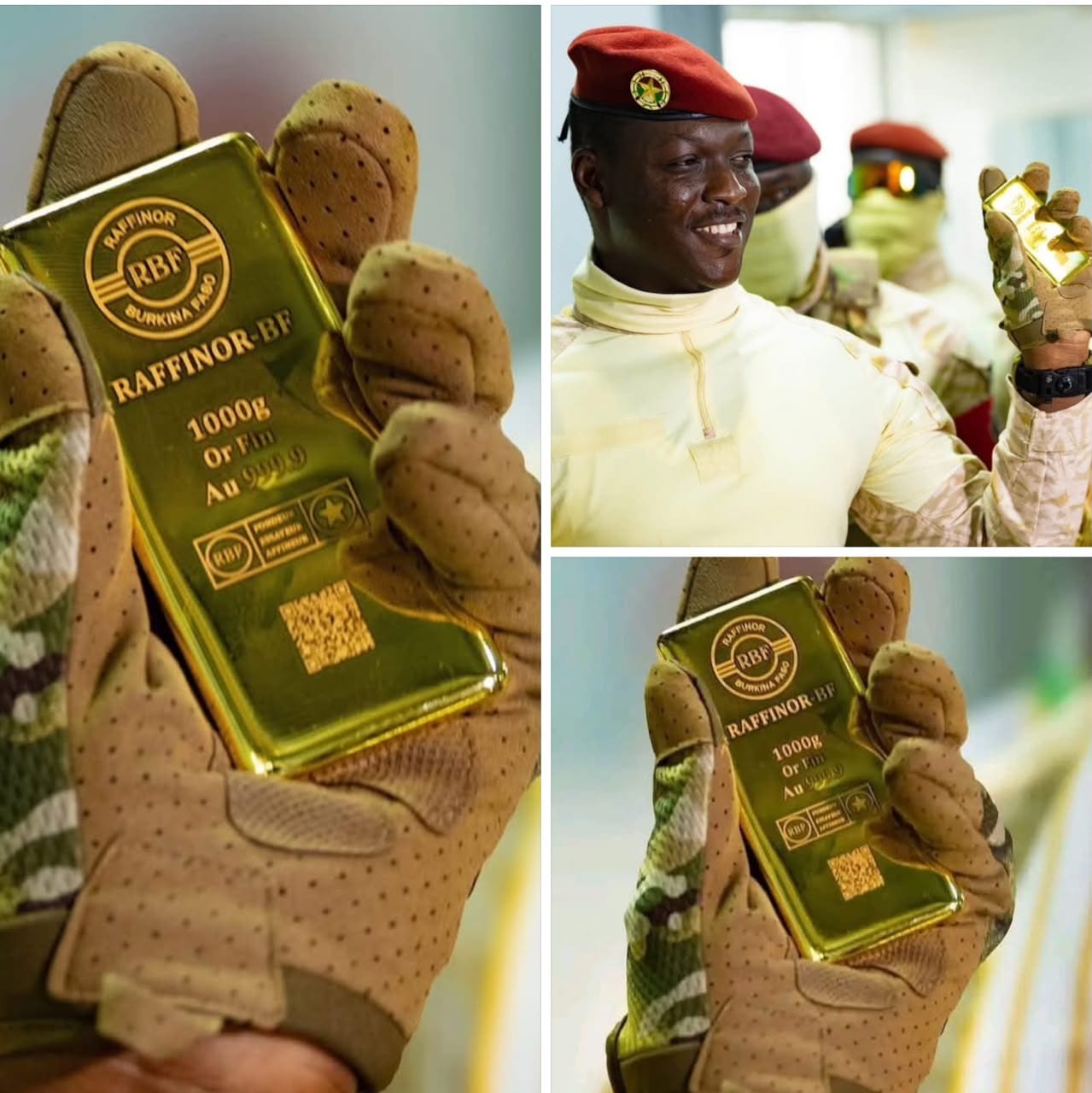
Ouagadougou, Burkina Faso — The military-led government of Burkina Faso has officially launched Raffinor-BF, the nation's inaugural domestic gold refinery. In a symbolic debut at the Ouaga 2000 capital district, interim President Captain Ibrahim Traoré was presented with the first-ever gold bar processed entirely within the country, marking a strategic shift toward domestic resource sovereignty.
For years, the West African nation has been a major player in continental mining but has historically functioned as a raw exporter, sending the vast majority of its unrefined mineral wealth overseas. The establishment of this refinery serves as a deliberate political and economic statement by Traoré’s military-led government. By shifting operations in-country, the administration aims to demonstrate that Burkina Faso can independently oversee and control its most lucrative export from the depth of the mines to the final stamped product.
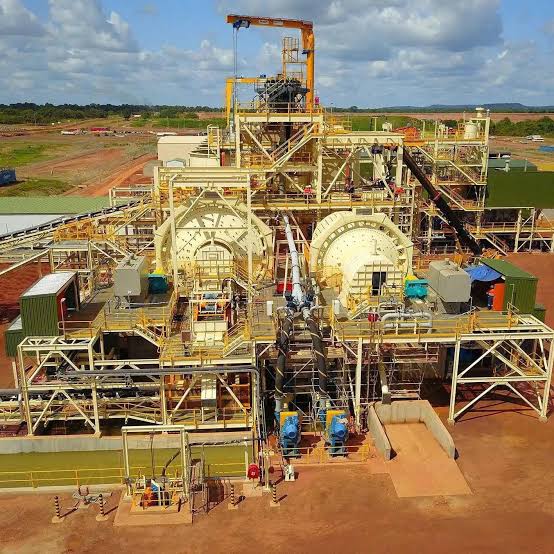
The economic rationale powering this transition is straightforward yet vital for the country's development. Gold has long surpassed cotton to become Burkina Faso’s primary export, with the mining ministry recording an annual output of over 94 tonnes extracted from 15 large-scale industrial mines alongside various semi-mechanized operations. Previously, this immense yield left the country in the form of doré—a crude, unrefined alloy—meaning that a significant portion of the ultimate market value and processing profits were captured by foreign entities.
During the grand opening, Captain Traoré emphasized the need to base the entire value chain domestically, a sentiment echoed even more aggressively by Mining Minister Yacouba Zabré Gouba, who declared that the nation was finally taking back the keys to its own house.
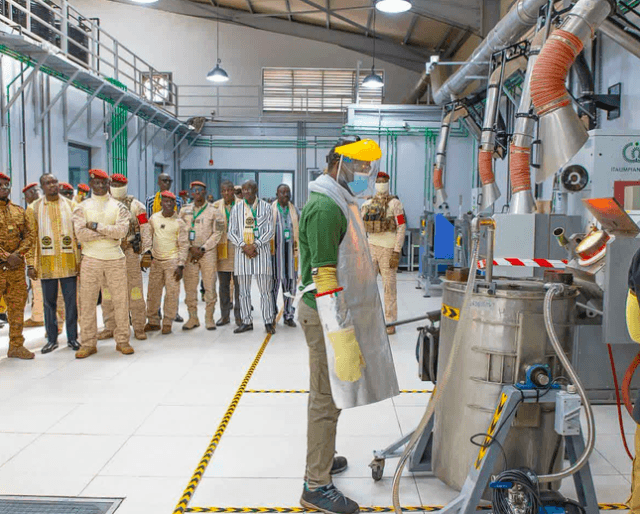
The sprawling five-hectare state-of-the-art facility features a comprehensive industrial infrastructure designed to meet strict international standards. Housing a foundry, a testing laboratory, high-security storage, and a specialized jewelry workshop, the complex is built to transform rough doré into pure fine gold bars boasting a 99.99% purity rating.
Spanning a construction period that began in November 2023, the ambitious infrastructure project required an investment of over 11 billion CFA francs, equivalent to roughly $19 million. Funding was pooled through a joint effort between the Burkinabè state, acting via the national precious metals enterprise SONASP, and private domestic investors. Beyond infrastructure, authorities anticipate that the operational plant will yield immediate social dividends, projecting the creation of 100 direct employment opportunities and an estimated 5,000 indirect jobs.
The true scale of the government's ambition is reflected in the refinery's massive processing capacity, which initially stands at 164 tonnes per year—well above the country's current annual extraction rates. Furthermore, officials plan to scale this capacity up to a staggering 515 tonnes in a subsequent development phase. This deliberate over-engineering is intended to position Burkina Faso as a dominant regional processing hub capable of refining gold imported from neighboring West African states while absorbing output from local artisanal miners.
This industrial milestone directly aligns with a broader resource nationalism strategy enacted since Traoré seized power in a September 2022 coup. Over the last two years, his administration established a state-owned mining entity and restructured sector regulations to increase the government's minimum stake in new mining ventures to 15% while mandating that foreign corporations fund local technical training. At the launch, Traoré explicitly challenged the nation's youth to master advanced metallurgical skills, positioning the plant as a nucleus for domestic educational advancement.
Despite the optimistic rollout, the refinery’s long-term viability faces immediate, severe obstacles outside the factory gates. The government continues to encounter immense difficulties regulating a highly fragmented informal mining sector that remains severely disrupted by ongoing regional jihadist violence. To operate profitably and avoid costly underutilization, the massive plant requires a highly secure, reliable influx of raw gold moving exclusively through official channels—a logistical challenge that remains largely unresolved.
Ultimately, the true measure of success for Raffinor-BF will rely on whether the surrounding economy can successfully adapt to keep the financial benefits within the country. While the physical location of the refining process has successfully changed, retaining the wealth requires building a robust domestic network of supporting industries, including specialized transport, advanced machinery maintenance, secure logistics, and international trade certifications. For a nation traditionally defined by what it extracts from the earth, this new refinery represents a precarious yet historic attempt to redefine wealth by how much can be processed, traded, and retained at home.
Comments
Join the conversation. Please keep it respectful.
No comments yet — be the first to share your thoughts.