
Bank of Ghana Launches Direct Cedi-to-Yuan Trade Settlement to Ease Dollar Pressures: Importers Can Now Settle Chinese Bills Directly in Yuan

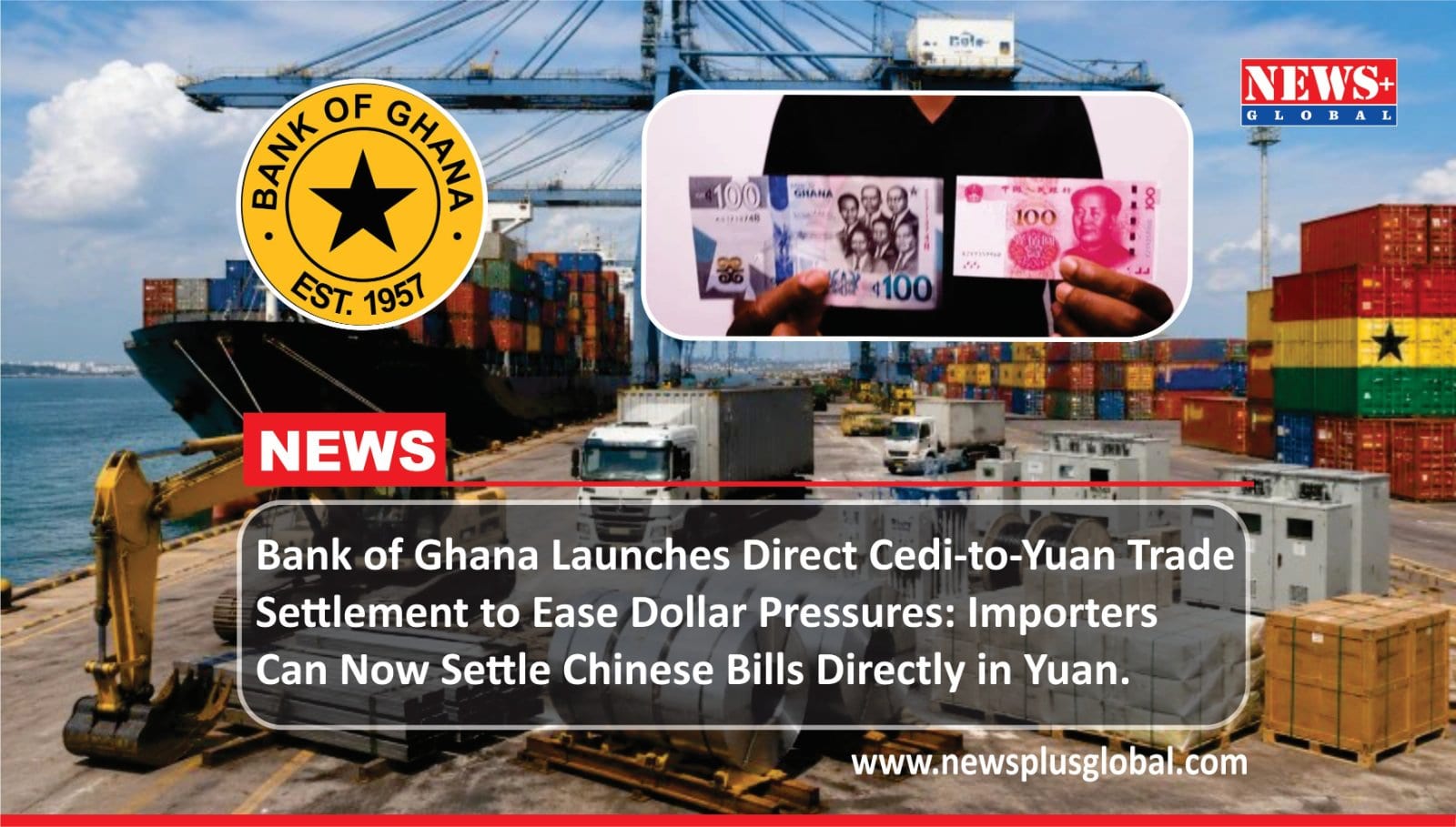
ACCRA, Ghana – In a bid to ease foreign exchange tensions, the Bank of Ghana (BoG) has announced a historic deal for businesses to clear import bills directly denominated in Chinese yuan using their Ghana cedi (GH¢) accounts.
Announced by central bank Governor Dr Johnson Pandit Asiama during the 132nd Monetary Policy Committee (MPC) press briefing, the de-dollarisation project is currently being trialled by Stanbic Bank Ghana. The central bank chief revealed that the state-owned GCB Bank is already preparing to launch a corresponding cross-border payment service to expand the reach.
The innovative clearing channel is designed to circumvent the need for US dollar correspondent or intermediary banks. It connects directly to China's Cross-Border Interbank Payment System (CIPS), substantially shortening the business community's transaction pipeline. Ghanaian importers buying critical commodities, machinery, industrial inputs and electronics no longer have to wrestle with scarce US dollars on the local forex market to clear their purchases – cedis in participating banks can be deposited to credit the Chinese supplier's yuan account directly.
According to published Stanbic Bank Ghana operational guidelines, corporate entities wanting to use the direct channel must have an active account, designate the renminbi (RMB) as the settlement currency and pass all standard compliance checks. The bank has stated that all eligible cross-border transactions submitted with the necessary paperwork before 2:00 p.m. GMT can be settled by next business day. Financial analysts note that while the new route dramatically reduces multiple foreign exchange conversion layers, it is a voluntary alternative to SWIFT rails for dollars, euros and pounds.
The monetary intervention comes as economic interaction between the two states is exploding – bilateral trade volumes between Ghana and China are up by 19.3%, with China mainly exporting manufactured merchandise, vehicles and textiles to the Ghanaian market. While China's exports to Ghana remain strong, Ghana's exports to China are dominated by high-value commodities. Recent trade data indicates that Ghanaian exports are overwhelmingly dominated by mineral fuels and oils valued at approximately $933 million, followed by ores and manganese shipments totalling around $356 million.
This financial shift also dovetails with broader international trade incentives to accelerate deeper Sino-African market integrations. On May 1, 2026, China officially implemented a sweeping zero-tariff initiative covering 53 African nations with which it maintains formal diplomatic ties. This preferential policy has provided zero-tariff access to eligible African exports entering the Chinese consumer market, with the specific framework for developing countries initially locked for two years – an unprecedented opportunity for Ghanaian commodity exporters to scale.
Geopolitical analysts view the CIPS infrastructure as a calculated maturation of China's global economic footprint, transitioning from the physical infrastructure of the Belt and Road Initiative (BRI) into the space of currency. Ghana's pilot has joined in with a growing continental trend highlighted by Business Insider Africa – several African governments are using the yuan to protect themselves from dollar volatility. Zambia now accepts yuan for local mining tax settlements, Kenya has converted parts of its dollar-denominated external debt to yuan to save an estimated $250 million annually and Ethiopia is exploring similar debt-conversion frameworks.
Ultimately, the central bank's new system offers a critical safety valve for Ghana's highly pressured foreign exchange reserves. However, both the BoG and commercial banking heads have cautioned the business community that the arrangement does not serve as an automatic guarantee of cheaper transactions. The economic benefits for individual importers will be highly dependent on interbank exchange rates, transaction fees and the competitiveness of domestic logistics, product standards and trade finance.
Comments
Join the conversation. Please keep it respectful.
No comments yet — be the first to share your thoughts.